Gisela Werner · 14 October 2026
Warsaw Lab Hydrogen Forging Breakthrough Sparks Curriculum Reforms Across Polish Manufacturing Programs
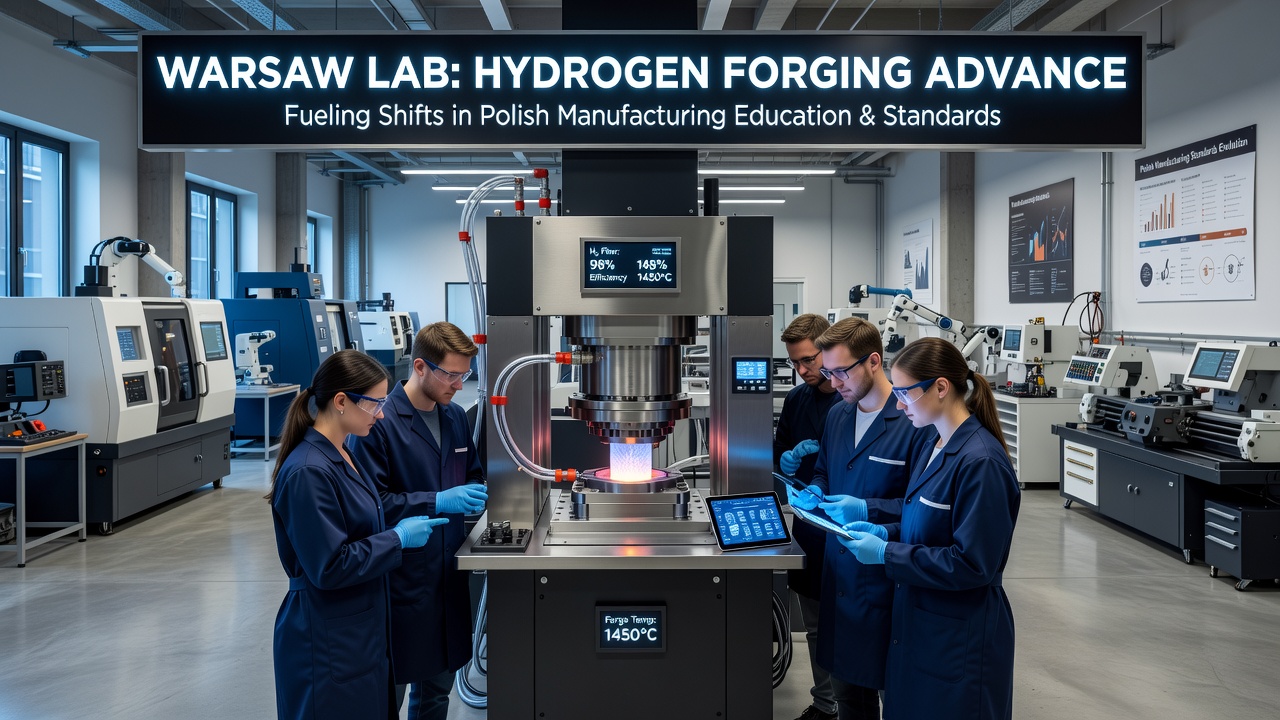
Warsaw Lab unveiled a hydrogen-based forging process in late 2025 that replaces traditional coal and natural gas heating methods with hydrogen combustion systems, and this development has prompted Polish technical universities to revise their manufacturing engineering degrees. Researchers at the lab integrated hydrogen burners into existing forging presses, which cut direct carbon emissions by measurable amounts during high-temperature metal shaping operations. Data from the facility shows consistent temperature control at levels required for steel and aluminum components, while industry observers note that the technology maintains product quality standards comparable to conventional methods.
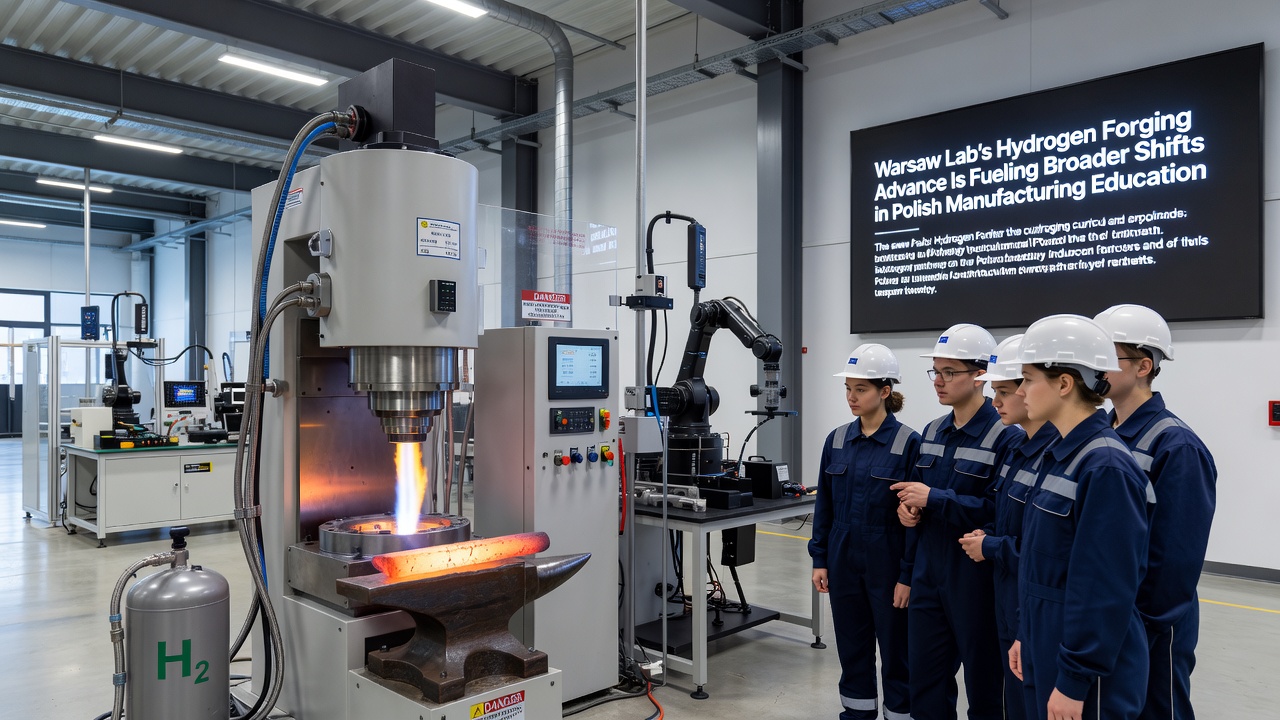
Polish universities responded by embedding modules on hydrogen energy systems into core manufacturing curricula, with the Warsaw University of Technology announcing updated course requirements effective for the 2026 academic year. Students now complete practical sessions using simulation software that models hydrogen flow rates and furnace atmospheres, followed by hands-on work at partner facilities. The Ministry of Science and Higher Education coordinated with several institutions to align these additions with national accreditation frameworks, ensuring graduates meet emerging competency benchmarks for low-emission production environments.
Integration of New Technical Standards in Degree Programs
Standards organizations in Poland updated certification protocols for forging technicians to include hydrogen safety and process control criteria, and these changes took effect in early 2026. Educational programs incorporated training on gas handling regulations, leak detection protocols, and emission monitoring equipment as mandatory components. One study conducted by the Polish Academy of Sciences tracked pilot cohorts at three universities and found that participants demonstrated proficiency in both legacy and hydrogen-based forging techniques after completing the revised modules.
Industry partnerships expanded as a result, with companies supplying equipment for campus labs and sponsoring thesis projects focused on scaling hydrogen forging for automotive and aerospace parts. The Silesian University of Technology introduced a dedicated elective on sustainable metallurgy that covers hydrogen supply chain logistics, while the AGH University of Science and Technology revised its materials engineering track to emphasize energy source transitions. These adjustments reflect documented shifts in workforce needs reported by Polish manufacturing associations.
October 2026 Milestones and Regional Rollouts
October 2026 marks the scheduled launch of a national pilot network that connects Warsaw Lab findings with regional technical schools, allowing instructors to access shared datasets on hydrogen forging performance metrics. Workshops scheduled across multiple voivodeships will train educators on updated laboratory procedures, and participating institutions will receive modular lesson plans covering combustion chemistry alongside traditional mechanical forming principles. Evidence from similar past initiatives indicates these coordinated efforts accelerate adoption timelines by several semesters.
External validation arrived through reports published by the International Energy Agency, which highlighted Poland's progress in adapting industrial education to hydrogen technologies. A separate analysis from the European Commission's Joint Research Centre examined supply chain implications and noted that educational reforms support broader decarbonization targets in Central European manufacturing sectors. Such references appear in program documentation distributed to university departments.
Workforce Preparation and Certification Updates
Certification bodies introduced new credential pathways that require demonstrated competence in hydrogen system maintenance and process optimization, and vocational schools adjusted their two-year programs accordingly. Trainees complete assessments on pressure regulation, flame stability monitoring, and integration with existing forging lines before receiving updated professional licenses. Observers report that employers now list these credentials among preferred qualifications for entry-level positions in modernized facilities.
Case examples illustrate the pattern: a mid-sized forging plant near Kraków partnered with a local technical college to host on-site training using scaled hydrogen equipment, resulting in thirty graduates hired directly into process technician roles within the first cohort. Another instance involved the Poznań University of Technology, where faculty incorporated real-time data feeds from Warsaw Lab trials into capstone projects, enabling students to analyze emission reductions under varying production volumes. These arrangements demonstrate how laboratory advances translate into structured educational outcomes without disrupting established degree timelines.
Conclusion
Warsaw Lab's hydrogen forging development continues to influence Polish manufacturing education through documented curriculum updates, standard revisions, and expanded industry-academic linkages. By October 2026, multiple institutions will have implemented the revised frameworks, supported by coordinated training resources and external research validations. The process shows measurable connections between technological innovation at the lab level and systemic adjustments in how future manufacturing professionals acquire relevant skills and credentials.