Ellis Perry · 30 September 2026
Poland's New Carbon Caps Spark Curriculum Overhauls as Universities Integrate Electric Furnace Training into Manufacturing Degrees
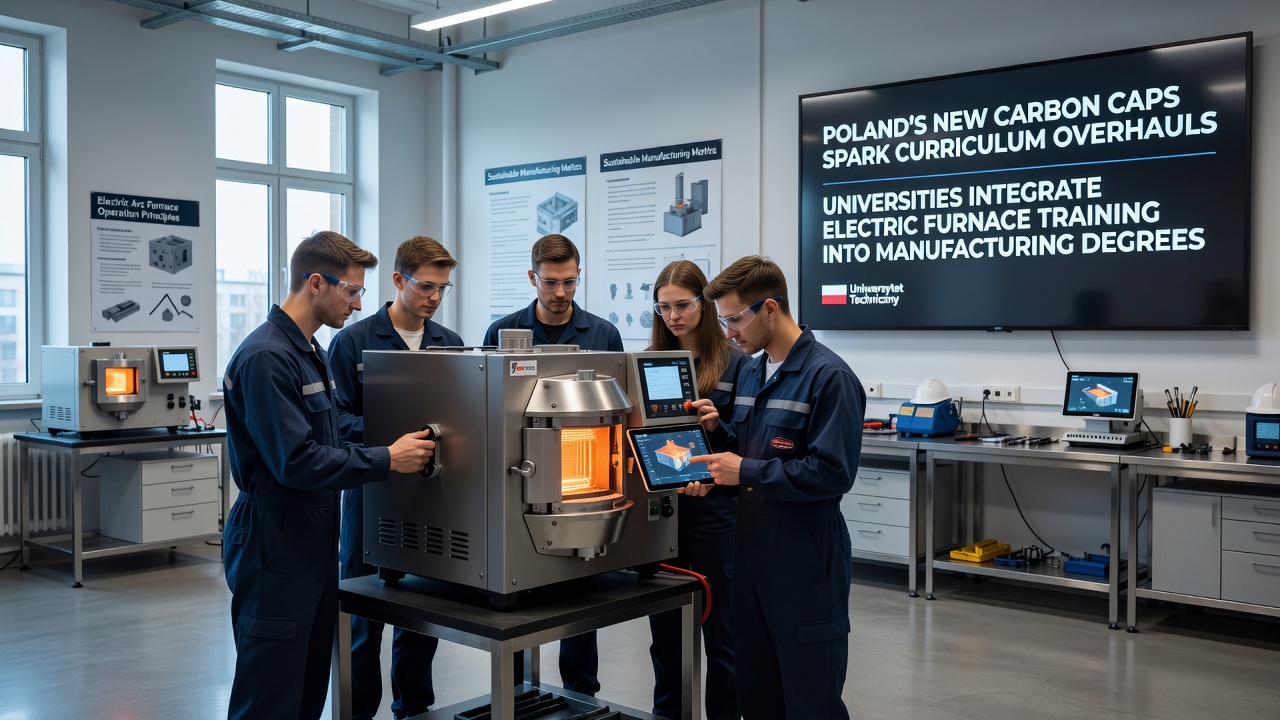
Poland's updated carbon emission limits have prompted several universities to revise manufacturing and materials engineering programs, with electric furnace operation and maintenance now forming a core part of the curriculum; these changes align with broader European Union targets that took effect in 2025 and will expand further by September 2026.
Under the revised framework, institutions such as the Silesian University of Technology and Warsaw University of Technology have introduced dedicated modules on electric arc and induction furnace technologies, replacing or supplementing traditional fossil-fuel-based process training; students now learn precise temperature control, power optimization, and scrap metal handling techniques that reduce direct carbon output during steel and alloy production.
Regulatory Drivers Behind the Shift
The European Commission tightened allowance allocations under the Emissions Trading System, requiring heavy industry to cut verified emissions by an average of 4.3 percent annually through 2030, and Polish manufacturers face additional national benchmarks that begin enforcement phases in late 2026; data from the EU registry show that forging and heat-treatment facilities accounted for roughly 12 percent of Poland's industrial emissions in 2024, prompting targeted educational responses.
Academic departments reviewed industry feedback collected through 2025 and determined that graduates needed hands-on experience with electric systems to meet hiring requirements at plants converting from gas-fired furnaces; the result was a set of laboratory upgrades funded partly through the National Centre for Research and Development, which allocated resources for new equipment capable of simulating 500-kilowatt to 5-megawatt industrial loads.
Course Structure and Practical Components
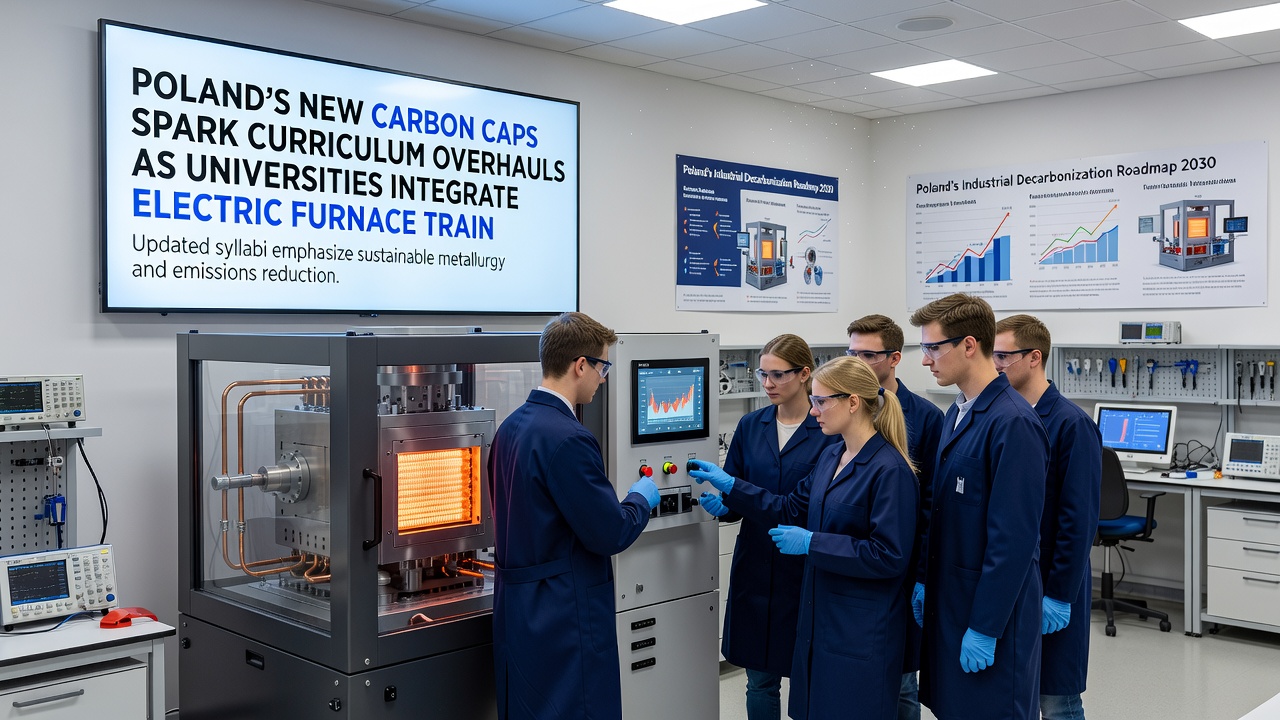
Typical revised degree pathways now include a mandatory 120-hour electric furnace practicum spread across the third and fourth years; participants operate pilot-scale units while monitoring real-time energy consumption, electrode wear, and slag chemistry, then analyze data to calculate carbon-equivalent savings compared with conventional methods. Coursework also covers grid integration, renewable power scheduling, and regulatory reporting procedures required under updated EU monitoring guidelines.
One program at the AGH University of Science and Technology pairs classroom sessions on thermodynamics with supervised shifts at a partner facility in Katowice, where students record furnace cycles and prepare compliance documentation that mirrors submissions to national authorities; the partnership began pilot testing in spring 2025 and will scale to full cohort participation by September 2026.
Industry Feedback and Employment Outcomes
Employers report that candidates familiar with electric furnace parameters require shorter onboarding periods when plants transition equipment, according to a 2025 survey conducted by the Polish Steel Technology Platform; several firms noted that new hires trained on modern systems contributed to measurable reductions in specific energy use within their first year on the job.
International comparisons indicate similar patterns elsewhere in Europe, with Germany's Fraunhofer Institute documenting parallel curriculum adjustments at technical universities in North Rhine-Westphalia, while Canadian research groups at the University of Alberta have published case studies on electric melting integration that Polish faculty have referenced during program design.
Challenges in Implementation
Faculty members cite the need for updated safety protocols around high-voltage systems and the logistics of sourcing sufficient scrap feedstock for repeated student exercises as primary hurdles; some departments have responded by scheduling shared equipment time across multiple programs and developing simulation software that models furnace behavior before physical runs occur.
Budget allocations for power infrastructure upgrades remain a point of coordination between universities and regional grid operators, yet progress reports filed with the Ministry of Science and Higher Education indicate that most targeted institutions will complete basic installations ahead of the 2026 academic year start.
Conclusion
Poland's manufacturing education landscape continues to evolve in response to tightening carbon regulations, with electric furnace competencies now embedded in standard degree requirements at multiple technical universities; the adjustments position graduates to support ongoing industrial modernization while meeting the compliance timelines set for September 2026 and beyond.